
Your Mac says "Your disk is almost full," a macOS update will not install because there is not enough space, or the whole computer just feels slow and stuck. A nearly full startup disk is one of the most common Mac problems we see, and the good news is that macOS has built-in tools to find what is using the space and clear it safely. Here is Apple's own step-by-step method, plus a few tips from our repair bench.
Step 1: See What Is Using Your Storage
- Choose Apple menu > System Settings.
- Click General in the sidebar, then click Storage on the right.
- Wait a moment while the colored bar fills in. It shows how much space each category uses, such as Applications, Documents, Photos, Messages and System Data.
On older macOS versions (before macOS Ventura 13), choose Apple menu > About This Mac, then click Storage.
Apple notes that if you see a More Info button (the small "i") next to a category, you can click it to see and manage the files in that category. This is especially useful for Applications, Documents, Messages and Trash.
Step 2: Use Apple's Built-In Recommendations
In the same Storage screen, macOS shows recommendations. According to Apple:
- Store in iCloud keeps your Desktop and Documents files, photos and messages in iCloud and only keeps recently opened files on the Mac when space is needed. Keep in mind this uses your iCloud storage plan.
- Optimize Storage removes Apple TV movies and shows you have already watched and keeps only recent email attachments on the Mac when space is needed.
- Empty Trash automatically erases items that have been in the Trash for more than 30 days.
Apple also says that when space is needed, macOS clears caches and logs that are safe to delete on its own, such as temporary files, interrupted downloads and staged updates.
Step 3: Move or Delete the Big Stuff
Apple recommends these places to look:
- Downloads folder. Open it from the Dock or Finder and delete installers and files you no longer need.
- Old iPhone or iPad backups. If you back up your phone to the Mac, old backups can be deleted.
- Apps you no longer use. Delete or uninstall them.
- Music, movies and podcasts you can stream or download again.
- Mail. In the Mail app, choose Mailbox > Erase Junk Mail and Mailbox > Erase Deleted Items.
- Photos and videos. These often use the most space. You can move your Photos library to an external drive.
- Empty the Trash. Files in the Trash still take up space until you empty it.
Need Space Right Now for a macOS Update?
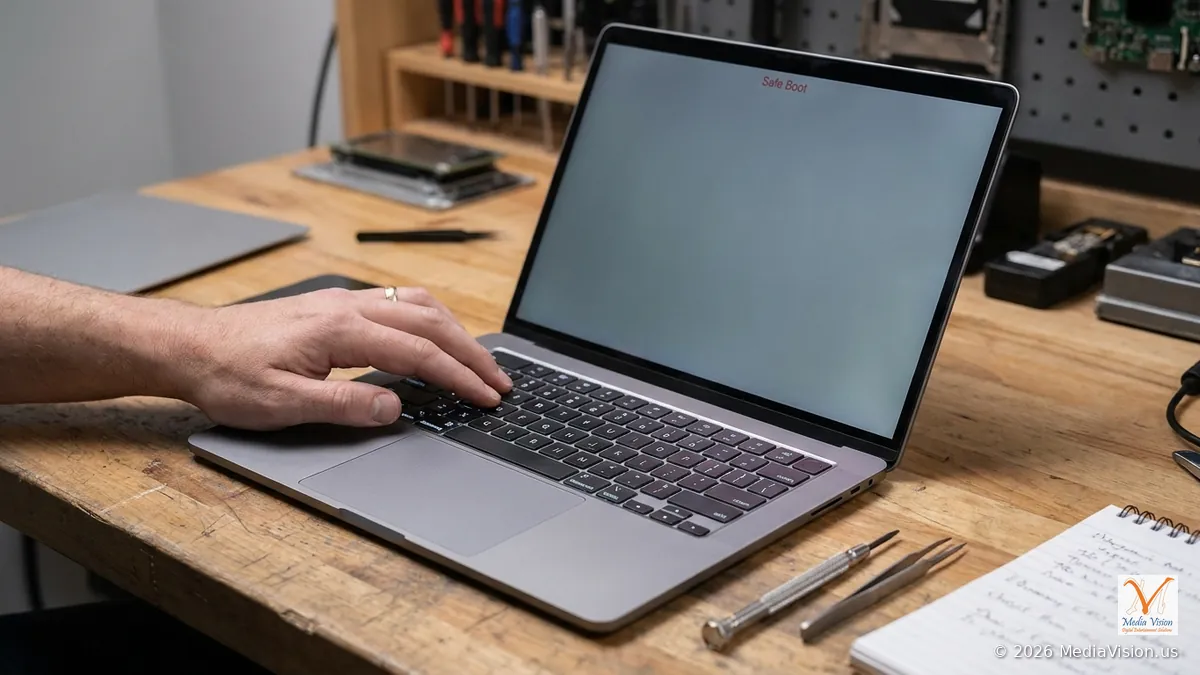
Apple says starting up your Mac in safe mode clears certain system caches, which can temporarily free enough space to finish a task such as installing a macOS update. The caches are rebuilt as needed, and you leave safe mode by restarting normally.
What About "System Data"?
Apple describes System Data (called "Other" on older versions) as a general category for Apple and third-party files that do not fit a more specific category. It can look large, but you should not go deleting files from system folders to shrink it. Clear the categories above first. If System Data still looks unusually large, that is a good time to have a technician take a look.
MediaVision Tips From the Repair Bench
- Back up before you clean up. Make sure Time Machine or another backup is current before deleting anything important.
- Do not rely on "cleaner" apps that promise to free gigabytes with one click. Apple's built-in Storage tools are enough for most people.
- Running out of space often? An external SSD for photos, videos and old projects is an easy fix, and we can help move your Photos library safely.
- Slow even with free space? The cause may be the drive itself or something else. See our guide: SSD health dropping fast? What to check.
How MediaVision Can Help
If your Mac is full, slow, or will not finish a macOS update, bring it to the MediaVision workshop in Anaheim. We can:
- Find what is filling your drive and clean it up safely, without losing your files
- Back up your data and move photos and large files to an external drive
- Get a stuck macOS update installed
- Test the drive and check for other causes of slowness
- Give you a clear, honest quote before any work starts
Diagnostic: $110, discounted to $85, and free with any repair.
MediaVision Computer Repair
800 S Brookhurst St, Suite 1B3, Anaheim, CA 92804
Phone: (714) 888-5959
Book Now
Frequently Asked Questions
Where do I check storage on a Mac?
On macOS Ventura 13 or later: Apple menu > System Settings > General > Storage. On earlier versions: Apple menu > About This Mac > Storage.
Does "Store in iCloud" delete my files?
No. Apple says files stay available in iCloud and can be downloaded when you need them, while recent files stay on the Mac. It does use your iCloud storage plan, so check how much iCloud space you have.
Why didn't deleting files free up space?
Deleted files go to the Trash first. Apple notes the space is not available until you empty the Trash.
Can I delete System Data files myself?
We do not recommend it. System Data includes files macOS and your apps need. Clear the other categories first, and ask a technician if it still looks too large.